
Big transfers need the family’s stamp of approval: FamilyWallet unveils a shared crypto wallet for families and groups
- Your own coins stay in a personal wallet and jointly managed assets go into a shared vault — a ‘two-layer’ design that never combines the two balances
- Designed to start without a seed phrase and to be recovered after switching phones, with inheritance and succession steps set up in advance
- Designed on BNB Chain and USDT; web demo now open at familywallet.cc
At a glance
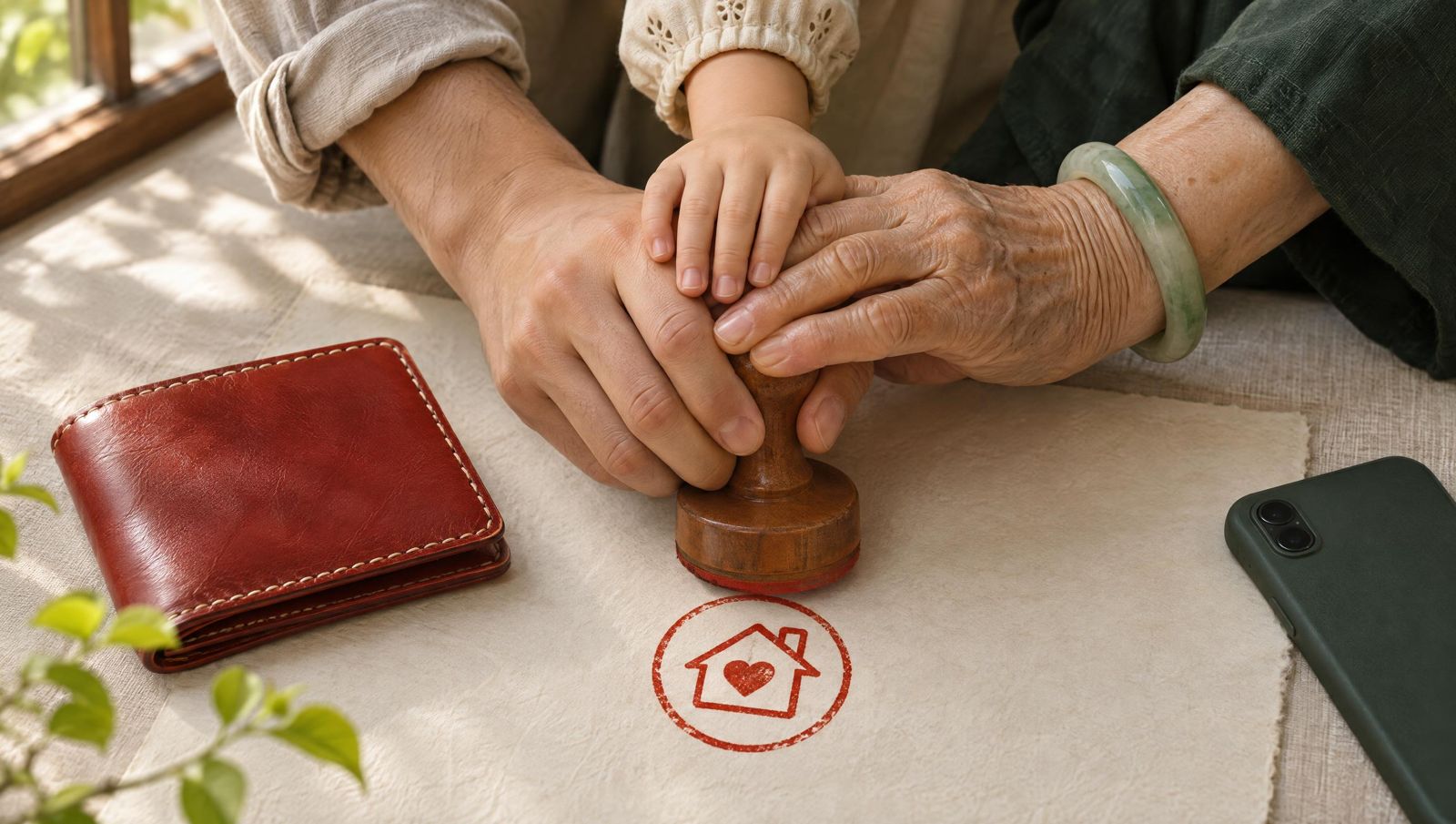
- A consensus-based wallet that lets families and groups set up shared vaults for specific purposes, where large transfers go out only after a set number of members each stamp (approve) them on their own phones
- Designed to start without a seed phrase to memorize, and to be recovered through family verification and a safety waiting period even if a phone is lost
- Try the personal wallet, the shared vault and two-person stamp approval hands-on today in the web demo at familywallet.cc, with no real money involved
FamilyWallet announced on November 18 that it has unveiled its namesake shared crypto wallet for families and groups, and opened a web demo at familywallet.cc where anyone can explore the wallet’s structure and approval flow without using real money. FamilyWallet keeps each person’s own coins in a personal wallet and the assets they manage together in a “shared vault.” When a large sum leaves a shared vault, the transfer is executed only after pre-selected members each stamp it on their own phones.
740 million people hold crypto, but wallets are still built for one
An estimated 740 million people worldwide held cryptocurrency in 2025, according to Crypto.com. Some 47 million people actually use stablecoins — digital dollars whose price barely moves — every month, according to Visa. Crypto is shifting from an investment product to everyday money, yet most wallets today still leave a single person to guard a 12-word seed phrase alone.
Under that model, if the phrase is lost, the phone breaks, or the one person who holds the key suddenly can’t be reached, the assets are simply locked away. Analytics firm Chainalysis estimates that 11% to 18% of all bitcoin has been permanently locked this way. A man in Britain lost about 8,000 BTC after accidentally throwing away a hard drive that held his private key, and Canadian exchange QuadrigaCX went bankrupt, unable to recover customer assets, after the death of its CEO, the only person who knew the cold wallet password. None of these cases involved hacking. Each happened because assets were kept by “one person, in one place, alone.”
Families pooling and spending money together is common. But managing household expenses, allowances, travel savings or club dues together in crypto has left only risky options: hand every key to one person, or copy the seed phrase and share it out.
What FamilyWallet is: money you spend alone moves fast, money you share moves together
FamilyWallet puts two layers inside a single wallet. The first layer is the personal wallet, where assets you use on your own can be received and sent right away on your own decision, with no need to wait for family approval. The second layer is the shared vault. Families or groups create vaults for specific purposes, such as “our household expenses,” “travel savings” or “alumni association dues,” and decide who takes part and how many approvals are required. The two balances are never combined on screen. Creating a shared vault leaves your personal wallet and your own decision-making authority untouched.
To send money from a shared vault, a member first drafts a transfer proposal that lays out the recipient, asset, amount and purpose on a single screen. If the vault’s rule is “2 of 3 approvals,” two people must each review the same details on their own phones and stamp the proposal with their own signing keys before the transfer is executed. No single key is shared among several people, and everyone sees the same record of who approved and when.

Six reasons FamilyWallet stands out
- Big money together, small money fast.Transfers are split by amount into those that go out immediately and those that need stamps collected first, balancing convenience and security.
- Start without a seed phrase.Instead of a phrase to memorize, FamilyWallet aims to offer a start built on fingerprint or face authentication and email.
- Designed to recover from a lost phone.Any two of four factors — Telegram account, device, recovery email and recovery phrase — restore the wallet on a new phone. While recovery is under way, asset transfers are locked and every family member is notified, and anyone can halt the process if something looks wrong.
- Inheritance and succession, planned ahead.By naming guardian members and setting up long-inactivity alerts and a “care mode” that unlocks only a living-expense limit, families make it possible for the remaining members to keep managing the assets under the agreed procedure if someone is away for a long time. This is technical succession and does not replace legal inheritance procedures.
- Money even the company can’t move.FamilyWallet pursues a non-custodial structure in which each user holds their own signing key, and the operator’s admin console has no button for moving assets at all.
- A family ledger in everyday language.Everyday categories like household expenses, allowances and travel savings come before technical jargon, and a built-in family ledger keeps the notes and receipts that show who spent how much and why.
Why now
First, the way money is used has changed. Stablecoin supply has passed $250 billion (Visa, 2025), and family remittances to low- and middle-income countries reached $685 billion in 2024, according to the World Bank. As the money families save and send together shifts to digital dollars, they need a tool to protect that money together.
Second, the risk of handing assets to someone else has grown. Even large exchanges cannot guarantee safety: in February 2025, about $1.5 billion in crypto assets was stolen from major exchange Bybit. An alternative is emerging that avoids entrusting assets to others without carrying the burden alone: sharing the keys with people you trust and protecting the assets together.
Third, the technology has become easier. FamilyWallet is designed to start on BNB Chain with USDT (BEP-20). It works the same way as wallets many people already use, such as MetaMask and Trust Wallet; USDT can be sent to and received from major exchanges directly; fees are low; and transfers finish in a few seconds. The shared vault’s approval rules are designed around a public multisignature contract on BNB Chain, so the number of required approvals and agreements to change members can be verified on-chain. FamilyWallet plans to expand to other assets such as BTC and ETH as a next step.
Fourth, there is a gap in the market. Most multisignature wallets are built for businesses and professionals, and many multisig services for families are membership plans with expensive annual fees. Easy wallets remain single-user. The space for “a wallet you use together, that speaks in everyday language” is still empty.
What you can try now, and what comes next
FamilyWallet has opened a web demo at familywallet.cc. Without depositing or moving any real cryptocurrency, visitors can click through the structure of the personal wallet and the shared vault, and the flow in which two people stamp a proposal to complete an agreement. The assets and balances shown on screen are examples.
Family invitations and notifications are being designed to start in Telegram, a messenger people already use. The full service will be rolled out in stages after on-chain execution and recovery have been verified and security reviews completed. Supported countries, assets and fees will be announced at the official launch.
“Paper, USB drives and phones can all be lost, but you don’t lose your family,” a FamilyWallet spokesperson said. “FamilyWallet is a wallet that ties your money not to an object you can lose, but to an agreement among the people you trust.” The spokesperson added, “We will build a wallet that doesn’t make you ask, ‘How do I send coins?’ but instead asks you, ‘Who should we send to, and from which funds?’”

By the numbers
###
About FamilyWallet
FamilyWallet is a consensus-based crypto wallet for families and groups. It separates a personal wallet for individual use from a shared vault managed together, and is designed so that large sums in a shared vault move only after designated members’ stamps (approvals) are collected. Its core features are a non-custodial structure in which each member holds their own signing key, a start without a seed phrase, recovery when switching phones, inheritance and succession procedures, and a family ledger. Its mascot, Stampy, guides users through the approval experience.
- Website
- familywallet.cc
- Web demo
- familywallet.cc
Notes
- The screens currently available are a demo; no real cryptocurrency is moved.
- Recovery and succession features and on-chain execution are designs still being verified ahead of launch and may change at the official launch.
- Technical succession does not replace legal inheritance procedures or wills under the laws of any country.
- This material introduces a service and does not constitute investment advice. Crypto assets carry the risk of price volatility.
- Sources: Crypto.com (published January 2026, 2025 estimate), Chainalysis estimate, Visa (2025), World Bank (2024). The Bybit incident is based on public reports from February 2025.
Press photos
The text and press photos may be used freely in coverage of FamilyWallet.